
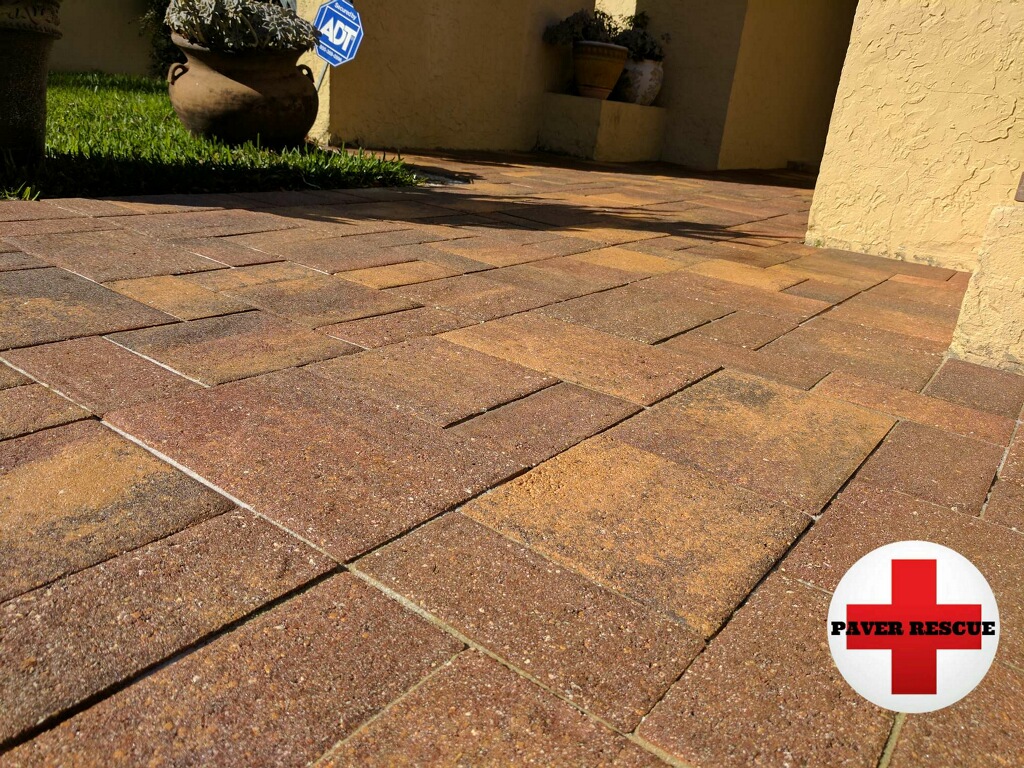
Short answer: most post-hurricane paver problems—settling, joint sand loss, efflorescence and algae/mold—are fixable with the right sequence: diagnose, small repairs, deep clean, resand, and reseal. What follows gives the signs, rough costs, timelines and which problems you can handle yourself versus when to call a pro.
How do I know if my pavers merely settled or if the base failed?
If the surface is level except for a few soft spots, that’s usually settling you can patch by lifting and replacing a handful of pavers; if long runs sink or the whole area feels spongy, the base likely failed and needs full re-compaction. A typical single-spot repair takes a few hours and costs under $10–$25 per square foot for labor and materials nationally; rebuilding a failed base with 4–6 inches of compacted aggregate can run $12–$35 per square foot depending on access and material type.
Check the joints. If joint sand is still present and pavers sit tight, lift one paver: if you find fine bedding sand or compacted crusher-run below, you’re in better shape. If you see loose dirt or voids, expect more extensive work. In Tampa Bay’s sandy soils and high water table, washout after sustained storms is common. Watch edges next to driveways and flower beds—edge restraints that broke during surge or saturated soil are a frequent cause of running edges.
Why did all the joint sand wash away and how do I fix it?
Storm surge, heavy downpours and repeat afternoon rains in the wet season wash joint sand out of paver joints. The first fix is resanding with polymeric or kiln-dried sand and compacting it into the joints; polymeric sand locks up better against water but costs more. Expect materials plus DIY time to be $0.50–$2.00 per square foot for basic resanding, while professional resanding with cleaning and compaction typically runs $1.50–$4.00 per square foot.
Don’t sand over loose debris. Clean the joints first with a broom or low-pressure rinse. If the patio is next to turf or flower beds, put a small barrier while the sand cures to keep run-off from washing it before the polymer sets. In coastal areas near Clearwater or St. Petersburg, salt-air can accelerate joint breakdown; consider a recoat schedule closer to three years rather than five for high-exposure sites.
What does that white powdery haze mean and will it go away?
That white haze is efflorescence—salts in the sand or base migrating to the surface after heavy rain or flooding. It’s common after hurricanes and it will reduce over time, but the first step is mechanical removal. A deep, controlled pressure wash combined with a chemical efflorescence cleaner removes most deposits; after the salts stop leaching you can reseal to slow recurrence. Expect a cleaning-and-efflorescence treatment to cost roughly $0.50–$2.00 per square foot for labor and materials.
Note: sealing a surface before efflorescence has run off traps salts and makes the problem worse. Wait until the majority of the white haze is mechanically removed and the pavers show no new salt bloom for several wet/dry cycles—usually 30–90 days after intense flooding in Florida’s humid climate—before sealing.
Is that green or black film just dirt, or is it mold and algae?
Green or black staining on pavers after a storm is usually organic growth—algae, mildew or fungus—favored by shade and humidity. It scrubs off with a mildew-safe cleaner and a soft pressure wash; stubborn stains in joints may need a biocide treatment. Professional cleaning that includes an algaecide and preventative sealer with mold inhibitor typically runs $0.50–$1.50 per square foot.
Pool decks with travertine need special care. Travertine soaks up cleaning solutions and can etch, so use cleaners formulated for natural stone and follow with a travertine-specific sealer. See our page on Travertine Pool Deck Sealing and Repair in Clearwater, FL for examples and process notes.
Can I reseal right after the storm clears?
No. Wait for the surface and base to dry and for any efflorescence to stop appearing. For existing pavers you’ll need 24–48 rain-free hours for a water-based sealer to cure in Tampa Bay’s humidity, but the larger constraint is trapped moisture below the surface—wait 7–14 days of normal weather if the area flooded, or longer after standing water. For new installations expect a 60–90 day wait so salts leave the bedding and the joint sand stabilizes.
Paver Rescue’s process follows the proven sequence: small repairs to damaged pavers, deep pressure cleaning to remove dirt, mold and mildew, replace lost joint sand, then apply a minimum of two coats of professional-grade water-based sealer. That motion—repair, clean, resand, seal—reduces rework and peeling in Florida’s climate.
How long will repairs and restoration take?
Small repairs and resanding of a typical 400–600 sq ft patio usually take one day if no major base work is needed. Cleaning, joint replacement and two coats of sealer can take 6–10 hours of work for a crew and needs 24–48 hours of dry weather to cure. If the base needs rebuilding, plan 2–4 days plus compaction time and drying.
High-humidity pockets like lanai areas in Wesley Chapel or shaded patios under live oaks take longer to dry. Plan winter or dry-season work where possible; however, Tampa Bay’s year-round humidity means a careful schedule and tracking the forecast are always part of the job. For routine cleaning and sealing in Brandon, our service page explains typical staging and timing: Paver Cleaning and Sealing Services in Brandon, FL.
When should I call a pro instead of DIY?
Call a professional when you see long runs of sinking (more than a couple of square feet), continuous sand loss after a repair, large areas of efflorescence that return after cleaning, or any sign of undermined edge restraints. Those are signs the base or edge system failed and require equipment and compaction beyond homeowner tools.
Paver Rescue offers free estimates by phone and will assess whether the job is repair-only or needs rebuilding. Read about our approach to driveways and larger restorations on the St. Petersburg service page: Paver Driveway Sealing and Restoration in St. Petersburg, FL.
What should I do next?
Walk the area with these checks: press the edges, inspect joints, look for white haze and green growth, and note any soft spots. If you have small isolated issues, plan cleaning, resanding and two-coat sealing after a dry spell. If you find multiple long runs of sinking, repeating sand loss, or persistent efflorescence, call a certified crew to inspect the base. Paver Rescue LLC can provide a free estimate from 10810 Carrollwood Dr., Tampa; call 813-391-6159 or email lucas@paverrescuellc.com to schedule a visit.


Leave a Reply
Want to join the discussion?Feel free to contribute!